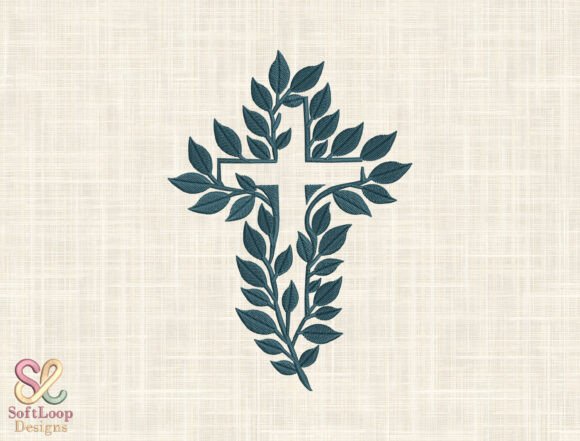
Botanical Leafy Cross Embroidery Design
A Quiet, Confident Statement—Not Just Another Religious Motif
When I first opened the Botanical Leafy Cross Embroidery Design, I didn’t see a symbol—I saw intention. The cross isn’t outlined or bolded; it’s revealed through negative space, cradled by soft, asymmetrical leaves that curl like new growth. It feels grounded—not preachy, not ornate, but quietly reverent. That subtlety is rare in faith-based embroidery files, and it’s exactly why this design stands out for real-world use: it doesn’t shout doctrine—it invites reflection. As someone who’s stitched hundreds of custom pieces for boutique shops and Etsy sellers, I immediately pictured it on a linen tea towel for a small-town gift shop, or centered on a lightweight cotton apron for a herbalist’s kitchen.
Where It Shines—and Where It Needs Thoughtful Placement
This design thrives in projects where craftsmanship and calm coexist. On a medium-weight tote bag? Perfect—leaves read clearly at 4–5 inches wide, and the open cross structure avoids dense fill stitch buildup that can stiffen fabric. On a baby onesie? Yes—but only if you’re using a lightweight stabilizer and testing thread tension first. The leaf veins are delicate, not fussy, so they hold up well on knit fabrics when hooped carefully. I recently used it on a cream-colored sweatshirt for a local church’s volunteer appreciation gift—no puckering, no skipped stitches, and the negative-space cross gave the piece breathing room amid heavier text elsewhere on the garment.
It also works beautifully as an embroidered patch. Because the design relies on shape and flow rather than tiny details or sharp angles, it translates cleanly to twill or felt backing. For holiday embroidery—think pillow covers or nursery decor—it reads as seasonal *and* timeless, avoiding dated motifs while still feeling intentional for Advent or Easter gifting.
Fabrics That Love This Design (and a Few That Don’t)
- Best friends: Linen, quilting cotton, medium-weight denim, brushed cotton, and stable knits like pique or interlock.
- Cautious pairing: Thin voile or silk charmeuse—those fine leaf edges may blur without proper cutaway stabilizer and low-tension stitching.
- Proceed with testing: Dark fabrics (especially black or navy)—the negative-space cross depends on contrast, so white or ecru thread must be crisp. Also, curved surfaces like caps: the asymmetry means placement matters more than with symmetrical crosses.
What It Adds to Your Handmade Product—Beyond Aesthetics
There’s a quiet professionalism in how the Botanical Leafy Cross Embroidery Design elevates a finished product. It doesn’t scream “handmade” with busy embellishment—it whispers quality through balance and restraint. Customers notice that. An Etsy seller told me her best-reviewed listing last quarter was a set of embroidered kitchen towels featuring this design: buyers specifically mentioned “feeling peaceful,” “not too religious,” and “like something I’d keep for years.” That kind of emotional resonance builds trust—and repeat sales.
For craft businesses, it supports brand consistency without locking you into one niche. Pair it with neutral-toned embroidery floss and natural fabrics, and it fits botanical apothecaries, mindful parenting brands, or even wedding stationery vendors offering custom linen napkins. It’s versatile enough for commercial embroidery but refined enough for heirloom baby embroidery—no rebranding needed.
Real Designer Notes—Not Just Theory
Before stitching your first Botanical Leafy Cross Embroidery Design project, do these five things:
- Test on scrap fabric matching your final project’s weight and stretch—even if it’s just a corner swatch. Watch how the leaf tips behave on knit vs. woven.
- Check stitch density visually: zoom in on the file preview. If the leaves feel too tightly packed near the cross arms, adjust underlay or reduce density slightly for breathable wearables.
- Confirm hoop size compatibility. This design sits comfortably in a 4x4 hoop at standard scale—but if you plan to resize beyond 120%, inspect the narrowest leaf stems for potential thread breakage.
- Run a black-and-white mockup. Does the cross remain legible? If not, consider slight contrast tweaks in thread choice—not design editing.
- Review licensing terms before listing finished items or digital embroidery files. This isn’t just about legality—it protects your reputation as a thoughtful craft business owner.
A Design That Grows With Your Projects
I’ve seen dozens of “faith-based” machine embroidery designs fall flat in practice—either too literal, too fragile, or too loud for modern sensibilities. The Botanical Leafy Cross Embroidery Design avoids all three traps. Its strength lies in what it leaves unsaid: no scripture, no gold thread demands, no rigid symmetry. Just growth, reverence, and space to breathe.
Whether you’re stitching personalized gifts for a hospital chaplaincy program, building a line of embroidered nursery decor, or creating limited-run patches for a spiritual wellness collective—the Botanical Leafy Cross Embroidery Design earns its place in your design assets. Not because it checks boxes, but because it behaves well, looks intentional, and carries weight without heaviness. That’s the mark of a truly usable embroidery file.
Final Thought: Let the Leaves Guide You
Don’t force this design onto every project. Its power is in context. Use it where quiet confidence matters—on a hand-stitched baby blanket, a minimalist sweatshirt for a retreat center, or a set of printable mockups for your Etsy shop. Respect its rhythm. Let the leaves lead the eye. And always, always test first. Because the best embroidery isn’t just stitched—it’s considered.