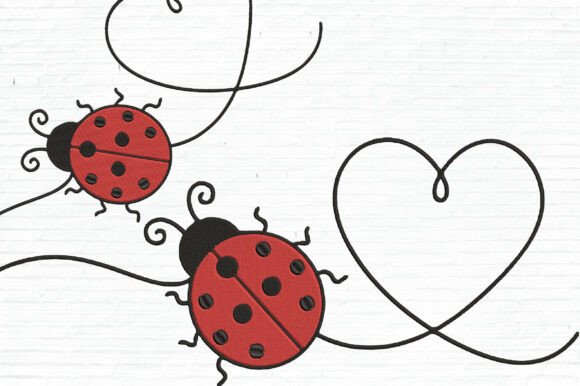
Ladybug Line Embroidery Design
First Impressions: Sweet, Simple, and Surprisingly Sophisticated
As an embroidery designer who’s tested hundreds of insect-themed files for personalized gift shops, the Ladybug Line Embroidery Design stands out—not with flash, but with quiet confidence. It’s a minimal insect stitch design that balances charm and clarity: clean outlines, gentle curves, and just enough detail to read as “ladybug” without clutter. There’s no heavy fill stitching or fussy antennae—just a heart-shaped ladybug rendered in smooth, continuous line work. That simplicity is its strength. It feels handmade, not mass-produced; elegant, not cutesy; spring-inspired, but timeless enough for year-round gifting. Customers drawn to soft aesthetics—think baby showers, wedding keepsakes, or mindful home goods—will instantly connect with its warmth and restraint.
Where This Design Shines in Personalized Gift Products
The Ladybug Line Embroidery Design is remarkably versatile across high-demand categories for small shop owners and Etsy sellers. On a blanket embroidery for a newborn, it reads as tender and symbolic—ladybugs carry folklore meaning luck, protection, and new beginnings. Stitched onto a linen pillow cover or cotton apron, it adds subtle personality without overwhelming the item’s function. For wedding gifts, pairing it with monogrammed initials on a embroidered towel or keepsake pouch creates quiet luxury—no florals needed. Nursery decor? It works beautifully on organic cotton wall hangings or muslin swaddle sets. And for craft fairs or boutique shelves, it elevates simple tote bags or tea towels into curated, story-driven handmade products. Because it’s minimal, it scales well—from 2-inch placements on baby onesies to 4-inch focal points on throw pillows—making it ideal for custom embroidery previews and digital mockups.
Thoughtful Placement Matters—Here’s Where to Proceed with Care
While the Ladybug Line Embroidery Design is forgiving, smart execution starts with awareness. Its delicate linework means it won’t hold up well on heavily textured fabric like terry cloth or thick waffle-weave towels unless stabilized aggressively—and even then, fine details may blur. Avoid placing it directly over seams, curved surfaces (like mug sleeves or rounded pillow corners), or stretchy baby clothes without testing seam allowance and tension first. On dark fabric, confirm your chosen thread colors provide enough contrast—especially if stitching small batches where color consistency matters for brand cohesion. And because it’s a machine embroidery design, always verify stitch density: too sparse, and it looks fragile; too dense, and it loses its airy charm. When in doubt, lean toward lighter density—it honors the design’s intent.
Why It Builds Trust—and Turns Browsers Into Buyers
For Etsy sellers and small shop product creators, perceived quality is everything. The Ladybug Line Embroidery Design communicates care through restraint. It doesn’t shout—it invites closer looking. That translates directly to stronger product photography: clean lines photograph crisply, pop against neutral backdrops, and pair effortlessly with natural lighting. Customers scrolling for meaningful personalized gifts respond to its emotional resonance—especially for milestones like baby arrivals or weddings—where symbolism matters more than trendiness. Because it avoids cliché, it feels intentional, not generic. That intentionality builds customer trust and reinforces the handmade quality of your finished product. You’re not just selling embroidery—you’re offering a quiet moment of joy, stitched to last.
Practical Embroidery Notes Every Designer Should Confirm
Before adding the Ladybug Line Embroidery Design to your production workflow, run these checks:
- Test on scrap fabric first—especially if using new thread brands or stabilizer types.
- Confirm hoop size compatibility; minimal line designs often fit comfortably in 4x4 hoops, but verify before digitizing or resizing.
- Review stitch density in your embroidery software—look for smooth transitions and consistent line weight.
- Use appropriate stabilizer: lightweight cutaway for stable fabrics, tear-away for woven cottons, and adhesive + tear-away for slippery or knits.
- Compare light and dark fabric mockups—a printable mockup helps visualize contrast and scale before stitching.
- Check small details post-stitch: ensure the heart shape remains legible and edges stay crisp—not feathered or broken.
- Verify commercial licensing before selling finished products—this digital embroidery file must be cleared for commercial embroidery use if you’re an etsy seller, baby product creator, or wedding gift designer.
If any specs—file format, recommended thread count, or exact hoop size—aren’t clearly stated with the Ladybug Line Embroidery Design, reach out to the source or test across multiple settings. Ambiguity here risks inconsistent results across orders.
A Design That Grows With Your Shop
What makes the Ladybug Line Embroidery Design especially valuable isn’t just its visual appeal—it’s its adaptability across customer needs and business stages. Launching a nursery line? It’s your signature motif. Expanding into wedding offerings? It becomes a subtle accent on linen napkins or guestbook covers. Scaling custom orders? Its clean structure holds up in batch production without losing character. As a bug-themed embroidery file, it sidesteps seasonal limitation—ladybugs suggest spring, yes, but their symbolism and style transcend the calendar. For makers building a recognizable aesthetic, this design doesn’t compete with your voice—it amplifies it. It’s proof that sometimes, the most powerful personalized gift isn’t the loudest one. It’s the one that fits perfectly, quietly, and meaningfully—just like a ladybug on a leaf.