Leaping Ballerina Embroidery
A Single Line That Carries Real Weight
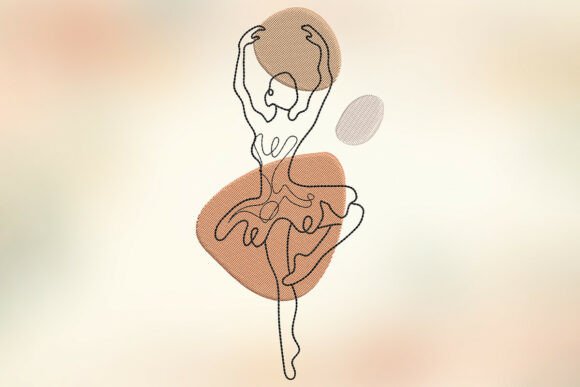
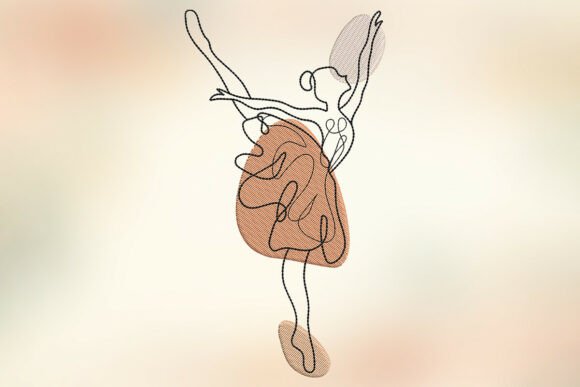
First impression? The Leaping Ballerina Embroidery doesn’t shout—it flows. As a designer who’s stitched hundreds of dance-themed pieces for boutique apparel and personalized baby gifts, I paused when I saw this one. It’s not a detailed portrait or a fussy silhouette. It’s a single, unbroken line tracing an arabesque mid-leap—hips tilted, one leg extended, arms open, head lifted. There’s tension in the curve, breath in the negative space. It feels alive—not decorative, but *expressive*. That matters more than you’d think when your finished product hangs in a nursery, wraps around a tote bag at a craft fair, or lands as a custom sweatshirt order on Etsy.
Where This Design Finds Its Footing (Literally)
I tested Leaping Ballerina Embroidery on three real projects: a heavyweight organic cotton tote, a soft-loop baby onesie, and a structured twill apron for a local dance studio’s staff gift set. On the tote? Perfect. The line held crispness without stiffness—clean, modern, and instantly legible at 3.5 inches tall. On the onesie? With proper cutaway stabilizer and reduced top tension, it stitched cleanly—even over the shoulder seam—and parents loved how delicate it looked next to tiny hands. The apron was the real test: curved waistband, textured fabric, frequent washing. Here, the design’s minimalism worked *for* me—not against me. No dense fill stitches to crack or fray; just confident running stitch that moved with the garment.
This isn’t a design for every surface. Skip it on ultra-stretchy performance knit tees unless you’re using high-quality tear-away + topping and reducing stitch speed. Avoid tight hoops under 4 inches—the arc loses its rhythm if compressed. And while it reads beautifully on light linen or oatmeal canvas, don’t assume it’ll pop on deep charcoal or black without testing thread contrast first. A matte black thread on dark fabric can disappear entirely; a bright ecru or heather grey often reads clearer than pure white.
What It Does for Your Handmade Product—and Your Customer
As an embroidery designer who also sells digital embroidery files, I pay attention to what makes a buyer pause, click “add to cart,” and then leave a five-star review. Leaping Ballerina Embroidery delivers quiet confidence—not flash, but intention. When stitched on a pillow cover for a dance teacher’s retirement gift, it didn’t compete with florals or monograms; it anchored the piece with grace. On a holiday tea towel bundle sold through a small shop, customers commented that it felt “like art you could hold”—not craft-store clipart.
That perception shifts value. A $28 embroidered tote with this design feels like a curated object, not mass-produced decor. For Etsy sellers, that means higher perceived quality, better photo mockups (it photographs cleanly in natural light), and fewer requests for revisions. For craft fair vendors, it draws dancers, teachers, and moms of young performers—people who recognize the pose, feel seen by it, and connect emotionally before they even ask the price.
Practical Designer Notes Before You Stitch
- Always test on scrap fabric first—especially if pairing with textured weaves (like bouclé or heavy terry) or layered garments (think double-layered hoodies).
- Review stitch density: Since it’s line-art, there shouldn’t be heavy fill areas—but confirm no accidental satin stitch segments were added in the file. Dense stitching kills fluidity.
- Check hoop size compatibility: If your machine defaults to a 5×7 hoop, verify the design fits comfortably within those bounds with breathing room—no clipping corners.
- Inspect small details: The toe point and fingertips are subtle. Zoom in digitally before stitching—if those endpoints vanish into thread nests, adjust underlay or reduce jump stitches.
- Test in black and white mockups: Does the shape read clearly without color context? It should. If not, consider simplifying background elements in your layout.
- Compare light vs. dark fabric backgrounds: Use your design software’s preview mode—or better yet, print two fabric swatches side-by-side with contrasting thread colors.
- Use appropriate stabilizer: Cutaway for knits and baby items; tear-away for stable wovens like canvas or linen. Skip lightweight fusible for this—it won’t support the line’s integrity through wear.
- Confirm licensing: If you plan to sell finished products (e.g., embroidered caps or nursery pillows) or resell the digital embroidery file itself, verify commercial use rights. Not all dance-themed embroidery files permit resale.
When to Reach for Leaping Ballerina Embroidery—And When to Pause
Reach for it when you want elegance without fuss: a minimalist wedding guest book cover, a boutique’s limited-run apron collection, a personalized gift for a graduating dancer, or a refined tea towel set for a yoga studio’s holiday shop. It works beautifully as a standalone motif—no need to crowd it with text or borders.
Pause if your project demands intricate detail (this isn’t an applique design with layered fabrics or shadow effects), if you’re embroidering on curved, rigid surfaces like structured baseball caps (the line may distort across the crown), or if your client expects photorealism. This is line-art storytelling—not illustration.
It also shines in digital contexts: as a clean vector-based embroidery file preview on your Etsy listing, embedded in printable mockups for social media, or as part of a cohesive design assets pack for fellow craft business owners. Its simplicity scales well—from 2-inch patches to 6-inch wall art hoops—without losing legibility.
Final Thought: Less Is Truly More Here
In a market saturated with busy, over-digitized motifs, the Leaping Ballerina Embroidery stands out by doing less—and meaning more. It’s not just a machine embroidery design. It’s a gesture. A breath. A moment held in thread. Whether you’re stitching it for a newborn’s onesie, branding a dancewear line, or building a portfolio of elegant embroidery project options, this design earns its place—not because it’s trendy, but because it’s *true* to movement, to craft, and to the quiet power of a single, intentional line.